Meal planning for picky eaters app: How to feed your family without daily friction
Collecting another folder of fussy-eater recipes will not end the nightly standoff at your table. What busy parents actually need is a meal planning for picky eaters app that fits dinner around real household routines, rather than forcing you to become a short-order chef. It's deeply frustrating to cook after a full working day, only to watch fresh food get rejected whilst you prepare a backup round of toast. Cooking two or three separate meals every evening quickly drains your energy and inflates the family grocery bill.
Dinner doesn't have to mean daily bargaining, guilt, or throwing good food into the kitchen bin. You'll learn how a structured digital routine simplifies dinner decisions for fussy eaters whilst keeping your household calm. We'll explore how to build a predictable weekly plan that respects selective tastes, cuts down on food waste, and restores quiet order to tea time.
Key Takeaways
- Ending the short-order cooking cycle begins with establishing clear evening routines rather than cooking separate backup meals on demand.
- A practical meal planning for picky eaters app prioritises simple ingredient swaps over complex recipes, keeping preparation manageable.
- Serving deconstructed components alongside one reliable safe food gives selective children autonomy without requiring multiple pots on the hob.
- Connecting planned dinners directly to a shared household shopping list cuts costly food waste and keeps grocery spending under control.
- Organising weekly dinners alongside the household calendar relieves decision fatigue after a demanding working day.
Why dinner with picky eaters drains family energy
By late afternoon, the question of what to cook begins to loom. Picky eating turns an ordinary tea time into a psychological standoff, where dishes prepared with care are rejected at a glance. When a child pushes their plate away, parents routinely step into the role of a short-order cook. Making a separate backup meal might keep the peace, but it doubles the pots on the hob, drags out kitchen clean-up, and leaves parents exhausted before bedtime routines even begin.
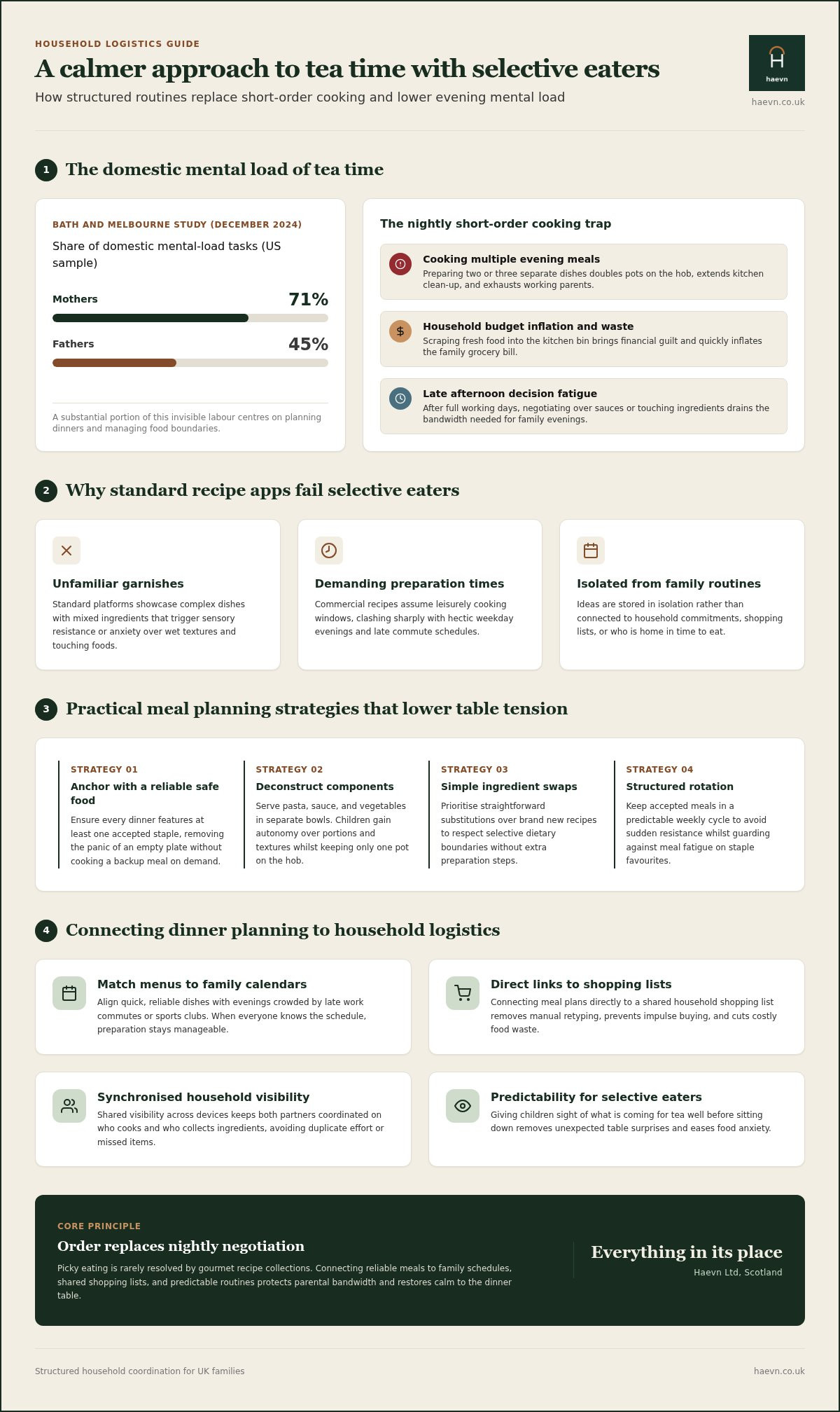
Decision fatigue makes this exhaustion worse. After managing a demanding workday, spending mental energy negotiating over sauces or mixed vegetables feels unsustainable. A December 2024 study by the University of Bath and Melbourne found that mothers handle roughly 71% of domestic mental-load tasks, compared to 45% for fathers, based on a US sample. A substantial portion of that invisible labour involves food planning. Because selective eaters often struggle with sensory triggers like wet textures or foods touching, standard recipe recommendations fall flat. Finding a practical meal planning for picky eaters app is less about gathering gourmet ideas and more about protecting parental bandwidth.
The hidden mental load of catering to selective tastes
Managing a selective diet requires constant mental arithmetic. Parents must remember which specific brand of yoghurt is acceptable, track whether pasta shapes pass inspection, and worry about adequate vitamin intake without provoking tears. The financial sting hurts too. Scraping fresh produce straight into the food caddy creates quiet guilt, turning dinner into a source of daily household tension.
Why traditional recipe apps fail fussy households
Most commercial cooking tools cater to adventurous cooks with uninterrupted evenings. They rarely suit homes dealing with texture aversions and packed schedules. Standard platforms typically fall short for three reasons:
- They showcase complex dishes with unfamiliar garnishes that heighten food anxiety for selective children.
- They demand extensive prep time that clashes with hectic weekday evenings.
- They store recipe ideas in isolation, failing to connect meals to a realistic household routine.
Without an adaptable meal planning for picky eaters app that respects these real-world constraints, families stay trapped in a cycle of cooking emergency backup toast.
What to look for in a meal-planning app for fussy eaters
Most app store roundups point parents towards standalone recipe libraries or calorie counters. These tools ignore real family dynamics. They offer hundreds of gourmet dishes, yet they fail to consider that one child panics if peas touch mash, or that football training runs until six o'clock on a Tuesday. An effective meal planning for picky eaters app bridges the gap between culinary ideas and household logistics. It must coordinate what you cook with who is home to eat it, without demanding hours of complicated prep.
Dietary filters and ingredient customisation
The right platform lets you tailor dinners around specific sensory boundaries instead of forcing generic meals onto your table. Look for features that let you omit difficult textures, accommodate food allergies, and protect reliable safe staples. Aligning digital tools with established guidance, such as the CDC's practical tips for picky eaters, means introducing gentle variety alongside familiar comforts. A structured rotation schedule also helps help avoid meal fatigue, keeping accepted dishes in steady circulation so children do not burn out on their favourites.
Shared family visibility and kitchen coordination
Coordination reduces evening surprises. When an app synchronises across multiple devices, both parents can see what is planned for tea, regardless of who arrives home first. Both partners stay aligned on who handles the cooking and who picks up fresh ingredients. You can match low-effort meals with hectic commute days and keep extracurricular clubs in clear view. Giving older children visibility over the weekly plan also reduces sudden resistance at the table, as they know what to expect before sitting down.
A practical setup connects your planned meals straight to a shared shopping list. When you swap an ingredient or drop a dish, the shopping items should update in the same central space without manual retyping. If you want to streamline evening routines across your household, you can set up a shared account to test how a coordinated routine changes dinner time.
Practical meal planning strategies that reduce table battles
Ending the cycle of short-order cooking requires a systematic approach to dinner. Instead of preparing separate menus, parents can use a four-step framework that protects their evening time whilst respecting a child's appetite:
- Anchor with a safe staple: Ensure every meal includes at least one food your child reliably accepts, such as plain pasta, bread, or cucumber slices.
- Serve deconstructed components: Keep mixed sauces, proteins, and carbohydrates separate on the table rather than serving blended casseroles.
- Schedule on a fortnight cycle: Map favourite meals across a two-week rotation to maintain comforting predictability without falling into a rut.
- Audit the kitchen first: Check existing cupboards and the fridge before generating the weekly shop, ensuring left-over staples are put to work.
When you record this routine in a dedicated meal planning for picky eaters app, the whole household knows what is coming. Planning ahead removes the late-afternoon panic over what to cook.
The deconstructed dinner approach
Deconstruction gives children personal autonomy over their plates. Presenting plain rice, steamed broccoli, roasted chicken, and curry sauce in separate bowls allows selective eaters to serve what feels manageable. This arrangement directly lowers sensory anxiety around textures touching or hidden garnishes. For adults, it means you can add chilli flakes, fresh coriander, or extra dressing to your own bowl without preparing an entirely separate meal from scratch.
Establishing predictable food routines without pressure
Predictability builds confidence at the table. Setting up theme nights, such as homemade flatbreads or baked potato bars, establishes a familiar structure that children can anticipate without dread. In line with the CDC's guidance on Tips to Help Your Picky Eater, offering small portions alongside safe items encourages positive exposure without pressure. You can also invite children to choose one weekly meal from a pre-approved list in your meal planning for picky eaters app. Giving them a voice in the decision helps shift the focus of tea time away from forced bites and back towards relaxed family connection.
Connecting meal plans to shopping and food waste
Selective appetites carry a hidden cost at the supermarket checkout. When children reject unfamiliar dinners, parents often buy duplicate backup items or stock up on novelty foods in the hope something appeals. This pattern drives up household expenses. The average UK household throws away hundreds of pounds in discarded food every year, with fresh fruit, bakery items, and fresh vegetables making up most of that volume. A thoughtful meal planning for picky eaters app links your scheduled menu straight to your weekly grocery buying, so you purchase only what your household actually eats.
Avoiding the duplicate buying trap
Wandering through supermarket aisles without a structured list makes impulse purchases inevitable. Keeping an updated record of current cupboard stock helps avoid you from buying a third box of fish fingers when two are already in the freezer. Grouping needed ingredients logically keeps shopping efficient:
- Check dry staples such as rice and preferred pasta shapes before heading out.
- Record the specific bread brands and yoghurts your children accept, avoiding untested alternatives that end up discarded.
- Organise your items by supermarket aisle to cut down on browsing time and reduce impulse buys.
Managing leftovers and reducing kitchen waste
Catering to selective tastes does not mean treating unselected items as kitchen waste. If a child eats only the plain sweetcorn from a deconstructed plate, the remaining roasted chicken and steamed vegetables can form tomorrow's lunchtime wrap. Single portions of rejected dishes can be frozen immediately for adult work lunches rather than sitting in the fridge until they spoil. Establishing a clear routine for using up perishables keeps good food out of your local authority food caddy.
When you combine weekly dinners with inventory awareness, your grocery budget becomes far more predictable. You can create your family hub account to connect your planned meals directly to a shared household list and protect your shopping budget.
How Haevn helps with this
Haevn brings domestic logistics into a single, uncluttered platform. Rather than forcing you to jump between disjointed notes and recipe bookmarks, it aligns what your family eats with your everyday routine. The Meal Planner within Haevn provides AI suggestions tailored to your family's specific dietary boundaries, serving as a practical meal planning for picky eaters app that reduces evening decision fatigue. Combined with the Use It Up feature, it helps you build dinners around ingredients already sitting in your fridge and cupboards. Once meals are set, required items transfer straight to The List, keeping grocery runs coordinated between partners.
Calm household coordination for up to eight members
Dinner cannot exist in isolation from the family schedule. Knowing that football or swimming finishes at quarter past six dictates whether a slow-cooker meal or a twenty-minute traybake makes sense. See how The Plan coordinates family schedules alongside evening meals so nobody is caught unprepared. Up to eight household members share access across their own phones under a single subscription of £6.99 a month or £69.99 a year, with an introductory first-year price of £49.99. Haevn is built to UK GDPR standards, keeping domestic data strictly private with no advertising or data selling.
What Haevn does not do
Honest boundaries preserve domestic calm. Haevn does not connect directly to bank accounts or smart kitchen appliances, avoiding unnecessary digital clutter. It does not provide medical feeding therapy or clinical nutritional diagnoses. Severe selective eating often requires professional paediatric support, and no digital tool replaces specialist care. Haevn also avoids noisy notifications or endless setup steps that add friction to your evening. Discover how the Meal Planner organises weekly dinners through simple, practical coordination that helps your household sit down to tea with far less strain.
Bringing calm back to family dinner times
Ending mealtime tension does not mean cooking three separate dinners or coaxing reluctant children through every forkful. Embracing a component-based approach, anchoring meals with familiar safe foods, and planning around your actual weekly schedule restores quiet order to the kitchen. When you rely on a purposeful meal planning for picky eaters app, you remove the late-afternoon guessing game and protect your family budget from unnecessary food waste.
With its calm design free from adverts, tracking, or digital clutter, Haevn coordinates your meals, calendar, and shopping in one central space. It is built to UK GDPR standards with a privacy-first model, ensuring household data remains secure. One plan covers up to eight members for £6.99 a month or £69.99 a year, giving both parents complete visibility over the week ahead.
Start your free trial. 14 days free, no card required.
Frequently asked questions
Can a meal planning app genuinely help with extreme picky eating?
A meal planning for picky eaters app helps establish calm table routines, but it does not treat clinical conditions. If your child shows severe food aversion or signs of paediatric feeding disorders, you should consult a doctor or specialist therapist. What digital planning provides is consistency. Organising safe foods and communicating menus in advance lowers anxiety for selective eaters while lifting the daily logistical burden from parents.
How do I involve my children in using a meal planning app?
Involve your children by giving them structured choices within set boundaries. Rather than asking an open question about what they want for tea, show them two pre-approved options inside the app and let them pick one. Older children can check the weekly schedule themselves, which removes the surprise factor that often triggers mealtime distress. Giving them agency turns dinner into a collaborative routine rather than a daily standoff.
Will I need to cook separate meals for adults and children?
You do not need to prepare separate meals when you plan around deconstructed dishes. Cooking one core protein, a staple carbohydrate, and a vegetable allows you to serve items in separate dishes at the table. Selective eaters can safely choose the plain components they accept, whilst adults can add sauces, spices, or dressings to their own bowls. This method cuts cooking time and leaves only one set of pans to wash.
Does Haevn work on both phones and computers?
Yes, Haevn works across modern web browsers on mobile phones, tablets, and desktop computers. You can access the platform by visiting app.haevn.uk and selecting Add to Home Screen on your mobile device for quick daily access. Dedicated native iOS and Android apps will arrive in the future. Up to eight family members can connect simultaneously, keeping the entire household synchronised across different screens.
How does the Use It Up feature help reduce household food waste?
The Use It Up feature generates practical recipe ideas based on the perishable ingredients already sitting in your kitchen. Instead of letting half a bag of carrots or leftover chicken spoil in the fridge, the tool suggests ways to incorporate them into upcoming dinners. This cuts down on duplicate supermarket purchases, lowers weekly grocery bills, and keeps edible food out of the household bin.
Is there a free trial to test Haevn with my family?
Haevn offers a 14-day free trial with no credit or debit card required to begin. You get full access to every live feature, including Meal Planner, The Plan, and The List. If you decide to stay, a single subscription covers up to eight members for £6.99 a month or £69.99 a year, with a £49.99 introductory rate for your first year.