Digital planner vs paper planner for family: which suits your household?
What if the best family planner isn’t the one with the most features, but the one your household actually checks? School dates might be in one calendar, appointments in a message thread and the shopping list on the kitchen counter. A paper planner is easy to spot, but it may not be with the person who needs it. A digital one can be shared, yet it may feel like another screen to manage.
The choice between a digital planner vs paper planner for family life comes down to how your household shares plans, handles changes and keeps everyday information together. You may prefer writing things down and seeing the week at a glance. Or you may need plans to stay current across several people and devices. This guide compares access, visibility, updates and privacy, and explains when using both can work. By the end, you’ll have a practical way to choose a planning method that fits how your family communicates, rather than adding another system no one wants to maintain.
Key Takeaways
- Choosing a digital planner vs paper planner for family life starts with how your household shares and checks plans.
- Compare how each option handles changes, visibility and access across family members.
- Use your household’s preferences for handwriting, fewer devices and privacy to guide the decision.
- If you switch to digital, agree on one shared calendar and add current commitments first.
- Consider a hybrid approach if your family wants shared dates in one place and paper for visible reminders.
Digital planner vs paper planner for family: what is the real difference?
A school event gets moved, an appointment changes, and someone needs to know who’s collecting the children. When dates live in different places, keeping everyone up to date can become a job of its own. A paper planner is a physical calendar or diary, often kept somewhere visible at home. A digital planner is a calendar or planning tool accessed on a phone, tablet or computer.
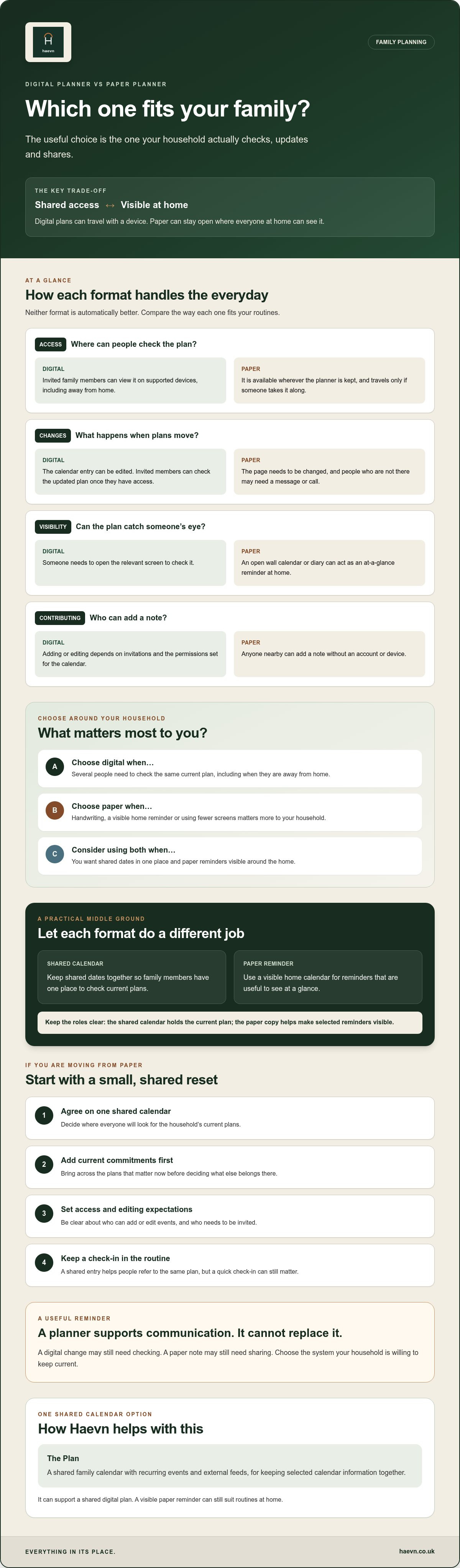
The main trade-off is shared access versus physical visibility. Invited family members can access a digital plan on supported devices, while a paper plan stays in one place. Before choosing, think about who needs to see the plan while away from home, who will maintain it, and whether a visible reminder helps your family remember to check it.
Access: Digital plans can be viewed by invited members on supported devices. A paper planner is available wherever it’s kept.
Editing: Digital entries can be changed in the calendar. Paper changes need to be written in or crossed out, and may need to be shared separately.
Visibility: Paper can be left open for an at-a-glance reminder. Digital plans need someone to open the relevant screen.
Portability: A digital calendar can travel with a device. A paper diary travels only if someone takes it along.
Who can contribute: Digital access depends on invitations and permissions. With paper, anyone nearby can add a note without an account or device.
What counts as a digital family planner?
A shared calendar lets invited people see the same set of plans. Depending on the tool and its settings, members may also be able to add or edit events. Google Calendar is one familiar example of a digital calendar. Some family organisation apps include a shared calendar alongside other household tools, but a calendar alone doesn’t automatically provide those extra features. For a wider grounding in planning and scheduling, see this overview of time management.
What paper planners do well
Writing by hand can suit people who like to think through the week on paper. A wall calendar or diary offers a fixed place for household reminders, visible without opening an app. Family members can add a note without needing a device or account. For routines that happen at home, such as regular clubs or collection arrangements, a calendar in a shared space can make the week easy to scan.
The limitation is that a change on the page doesn’t automatically reach anyone elsewhere. If an appointment moves, someone may need to update the planner and tell the people who aren’t at home to see it.
Neither format is automatically better. The practical choice in a digital planner vs paper planner for family life depends on who needs to check the plan, where they are and how your household prefers to communicate. Some families also keep meal planning separate from calendar dates. A meal-planning feature is one example of a tool for that distinct task.
How digital and paper family planners handle everyday changes
A school event moves from Tuesday to Thursday. With a digital calendar, the person who manages it can edit the entry, and invited family members can view the update on supported devices once access is set up. That gives everyone a shared place to check, rather than relying on a chain of messages that may not reach the whole household.
Paper works differently. A calendar on the kitchen wall gives everyone at home a physical reference point, but an update only reaches people who check that copy. If someone is out, they may need a message or a call as well. Neither format means that someone sees a change, remembers it or agrees with the plan. A quick check-in can still matter.
When several people need the same current plan
Putting shared dates in one calendar can make coordination clearer. If a school event changes, the household can refer to the same entry rather than comparing separate diary notes. A digital calendar can also be checked away from home, provided each person has access and can use a supported device.
For example, The Plan shared family calendar supports recurring events and external feeds. These features can help keep regular dates and selected calendar information together. Decide who can add or edit events, then agree that the shared calendar is where everyone checks for current plans.
When paper remains easier to use
Some people prefer handwriting. Others like a kitchen noticeboard that’s visible without unlocking a device, or want to reduce how often they use screens. Those are practical preferences, not signs that a household is behind. A paper calendar can suit routines everyone sees at home, such as regular clubs or collection arrangements.
If plans change, the paper copy needs updating, and anyone who isn’t there may need to hear about it separately. One option is to keep fixed routines on paper while sharing changes directly with anyone who needs to know. If your household is weighing up the digital planner vs paper planner for family choice, start with where people actually look for updates. You can see a shared planning space and consider whether it fits your routine.
Which family planner fits your routines, access needs and privacy preferences?
The right choice depends on who needs the plan, where they’ll check it and what they’re comfortable keeping digitally. Digital access also depends on suitable devices, connectivity and the family’s willingness to use the system. If some people won’t check it, shared access alone won’t make it useful.
Choose a format your family will check and maintain. Use this quick guide to start the conversation:
- Shared access: Choose a digital calendar if family members need to view or update plans from different places.
- Handwriting: Choose paper if writing appointments down helps people think or remember.
- At-a-glance visibility: Choose a paper calendar if a visible copy at home is what prompts the household to check the week.
- Fewer devices: Choose paper if you’d rather keep routine planning away from screens.
Questions to ask before choosing
Start with the practical details. Who needs to see the plan, and who needs to update it? Can each person access a shared device or account when they need to? Would the family rather check one paper copy in a familiar place, or use a calendar available on devices?
Then consider privacy. With a digital plan, review who has access and decide what household information belongs there. You don’t have to add every detail. Keep entries as simple as the people using the plan need them to be.
Could a hybrid system suit your family?
It can. A digital calendar could hold dates that several people need to check, while a paper reminder on the kitchen noticeboard makes the day’s routine visible at home. The key is to avoid keeping two competing versions of the same plan. Agree which one is authoritative for each kind of information, and who updates it.
For example, the digital calendar might be the main source for appointments, while a paper note highlights this week’s regular activities. If a date changes, update the agreed source and make sure anyone relying on the paper reminder knows what to change. A considered approach to family admin in one place starts with deciding what belongs where, not moving every detail into one tool.
If you’re weighing up a digital option, you can explore a shared planning space and consider whether it suits your household’s access and privacy preferences.
How to move from a paper family organiser to a digital one
Changing planners doesn’t mean copying every old note onto a screen. Start with the information your household needs now, then give everyone time to get used to checking the new calendar. A short trial can show whether it fits your routine before you decide what to keep.
- Agree which calendar to use. Choose one shared calendar as the main place for household dates. Be clear about who can add or edit events.
- Add essential dates. Enter current appointments, activities and recurring routines first. Leave old notes and past events behind unless they’re still useful.
- Invite the family. Set up access for the people who need to view or update plans. Check that they can open the calendar on a suitable device.
- Review how it’s working. Choose a regular moment to look at the week ahead together. Notice whether people check the calendar and whether the way you use it needs adjusting.
Start with the dates your family relies on
Begin with commitments that affect the coming days and weeks, such as appointments, clubs and regular routines. A shorter, relevant calendar is easier to start using than a full archive of handwritten notes. Keep sensitive details out of shared entries unless the household has agreed they belong there. Clear expectations about who updates an event can also help avoid uncertainty when plans change.
Make the new routine easy to maintain
Pick a regular time to review the upcoming week, perhaps alongside another household routine. If some family members rely on a visible prompt, keep a paper display temporarily, but agree which source holds the current details. A family day overview can also help bring daily information into view.
If an update gets missed, pause before blaming the tool. Check whether everyone knows where to look, has access and understands who is responsible for changing the entry. The digital planner vs paper planner for family decision is partly about format, but a clear routine matters too.
Ready to try shared planning with your household? Set up a shared family calendar and see how it fits your week.
How Haevn helps with this
If your household wants shared digital planning alongside other everyday tools, Haevn is one option to consider. It’s a family hub, not a paper planner or a calendar-only service. That distinction matters: a digital hub may suit a family that wants plans and household information together, but it won’t provide the physical, always-visible prompt of a calendar on the kitchen wall.
A shared calendar within a wider family hub
The Plan is the shared calendar. It supports recurring events and external feeds, so regular dates and selected calendar information can sit alongside family plans. The Hub gives a dashboard overview of the family’s day, while The List holds shared shopping, chore and routine lists. Each has a different role. The Hub is a digital overview, not a replacement for a paper display if your household relies on seeing reminders at home.
Household planning can involve more than dates. For instance, meal planning for your family is a related task, but it’s separate from deciding whether a paper or digital calendar suits your routine.
Check the practical fit before choosing
Consider which devices your family uses and whether everyone who needs access is comfortable checking plans that way. One subscription supports up to eight family members.
Haevn also brings tools for household budgets, smart-home devices, meals and chores into the same family hub. It’s a paid subscription, with Monthly and Annual plans, and includes a 30-day free trial with no card required. These details may help you decide whether to try a shared digital hub, keep using paper, or combine the two. The digital planner vs paper planner for family choice still comes down to what your household will use and maintain. You can start with the calendar and decide whether the wider hub fits your needs.
Start your 30-day free trial, no card required.
Choose the planner your family will keep using
The best choice in the digital planner vs paper planner for family debate is the one that fits how your household shares and checks plans. Digital calendars make it easier for invited family members to view an updated schedule across supported devices. Paper keeps reminders visible at home and suits people who prefer handwriting. A hybrid can work too, provided everyone knows which version is the source of truth.
If you’re considering a shared digital hub, Haevn’s The Plan is a family calendar with recurring events and external feeds. One subscription supports up to eight family members. It’s a digital option, not a paper planner, so consider whether your household has suitable devices and will check it as part of its routine.
You don’t need to move every household detail at once. Start with the dates people rely on, agree who updates them, and review how the arrangement works. Small, shared habits can make planning feel more manageable. Start your 30-day free trial, no card required.
Frequently asked questions
Is a digital planner better than a paper planner for a family?
Not automatically. A digital planner can suit a family that needs to check or update shared dates from different places, provided everyone has suitable devices and access. Paper may work better if your household prefers handwriting or an at-home calendar everyone can see. The digital planner vs paper planner for family choice depends on your routines, access needs and which format people will actually check.
Can a family use a digital and paper planner together?
Yes. You could use a digital calendar as the main record for shared appointments, then display a paper version of the week at home. Agree which source is authoritative. If a date changes, update the main record and any paper reminder people rely on. That way, the two formats support different needs without becoming competing versions of the plan.
What should I look for in a digital family planner?
Look for a calendar that lets the right family members view plans and, where needed, contribute updates. Check which devices it supports, how access is managed and whether it handles recurring events. Consider privacy too: decide who should see the plan and what details belong in it. If you only need to share dates, a simple calendar may be enough.
Is a paper planner enough to organise family life?
It can be, particularly if the planner stays somewhere visible and everyone checks the same copy. A wall calendar or diary can hold appointments, activities and routine reminders without a device or account. The practical limit is access away from home. If someone needs an update while out, you may need to tell them separately or update another calendar too.
How do I get my family to use a shared digital planner?
Keep the change manageable. Choose one shared calendar, add current commitments first and agree who can update events. Check that everyone who needs access can open it on a suitable device. Set a regular time to review the week together, then ask what’s working. If people aren’t checking, clarify where the current plan lives before adding more tools.