A back to school routine planner for calmer family mornings
When breakfast, packed lunches, PE kits and departure times all live in someone’s head, it’s easy for a task to slip through. A back to school routine planner gives your family one shared place to see what needs doing and who is responsible. The aim isn’t to get every minute right. It’s to make the next small task clear.
A tidy timetable can still unravel when work, school or family plans change. A useful routine is a shared starting point, not a strict schedule to follow at all costs. It gives the week some shape while leaving room for real life.
This guide shows you how to build morning and evening routines, share responsibilities and keep the week’s plans visible. You’ll also find ways to adjust the routine when circumstances change, so it remains useful after the first week of term.
Key Takeaways
- Use a back to school routine planner to map recurring jobs and assign responsibility for each one.
- Start with the morning pinch points, then choose a few essentials to prepare the night before.
- Separate fixed commitments from tasks that can move when plans change.
- Choose one shared place for calendar commitments and to-dos to avoid conflicting versions of the week.
- Use shared events, lists and assigned chores to make the routine clear to everyone.
Why a back to school routine planner should work for the whole family
The return to school brings several moving parts back into view: breakfast, bags, what needs to go in them, and school times alongside work and other commitments. A back to school routine planner sets out recurring tasks, timings and responsibilities in a shared place, rather than leaving one person to remember every detail.
The aim isn’t to make each day identical. School may set a fixed start time, but your household can choose when to get dressed, prepare lunch or put shoes by the door. Build a routine around the parts that need to happen, with room for a late change, a tired evening or a forgotten water bottle.
What belongs in a school-week routine?
Include the repeatable tasks that make a difference in your home. These might be washing and breakfast in the morning, snack or activity arrangements after school, and dinner, bag checks or clothes for the next day in the evening. Mark fixed commitments, such as the school start time, separately from jobs that can happen earlier or later.
Keep the first version short. Choose the few tasks that cause the most confusion, then add others only if they help. If weekday meals are a regular sticking point, the Meal Planner can support that part of household planning.
Why shared responsibility matters
Give each recurring task a clear owner so the family doesn’t rely on one adult to remember everything and prompt everyone else. Agree who checks the calendar, who handles a particular part of the evening preparation, and what children can manage themselves. Keep the conversation calm and age-appropriate. If the split doesn’t suit the week, revisit it.
Families have different preferences about structure and independence. Learning about parenting styles may help explain why one person favours more reminders while another prefers room to work things out. The useful question is what helps your household coordinate, not which approach looks perfect on paper.
A routine planner is a shared guide to the next important tasks, not a rigid timetable for every moment. That distinction makes it practical: everyone can see what matters, while the family can adapt when the day changes.
Build a back to school routine planner around mornings and evenings
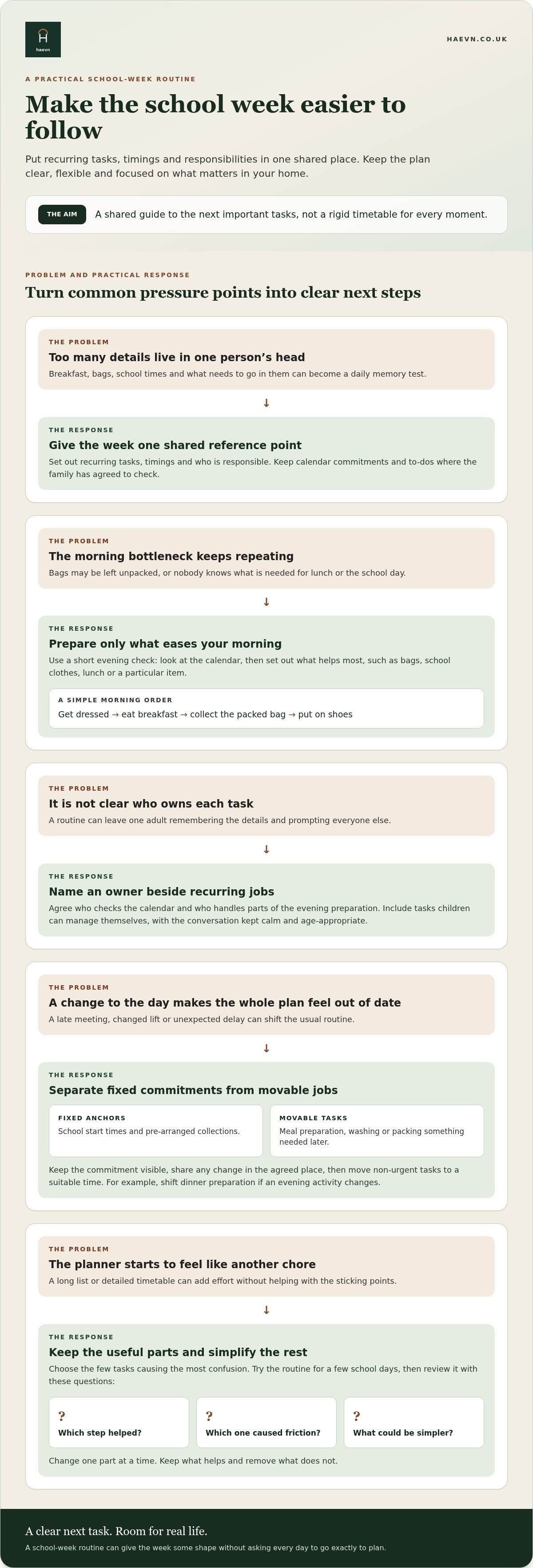
Start with what actually causes friction, not an ideal timetable copied from somewhere else. List the sticking points, choose the essentials, assign responsibility, then try the plan and review it. Perhaps bags are left unpacked, or nobody knows what’s needed for lunch. Begin with those issues. Keep instructions brief and visible instead of trying to account for every task the family might do.
There’s no need to prescribe one wake-up time or bedtime for every household. Choose timings that fit your school run, work and family arrangements. Guidance on establishing comfortable, effective routines also emphasises making routines workable for the people following them.
What to prepare the night before
Use a short evening check to look ahead to the next day. Check the calendar, then prepare only what will help with your household’s morning bottlenecks. That might mean putting bags by the door, checking school clothes, planning lunch or setting aside a particular item.
Keep the reset modest. If lunch takes little time but finding the PE kit causes a scramble, prioritise the kit. A back to school routine planner should reflect the tasks that matter in your home, not become another long list to finish before bed.
How to make mornings easier to follow
Write tasks in the order they happen, beginning with the first action after waking. For example: get dressed, eat breakfast, collect the packed bag, put on shoes. Add a name beside tasks that need a clear owner, such as preparing breakfast or checking the door before leaving. This makes the routine easier to follow without turning it into a system for monitoring children.
Preparing a few essentials in the evening gives the morning a clearer starting point, without dictating how every minute must go. Try the routine for a few school days, then ask what still causes delays. Keep what helps and remove what doesn’t.
If you’d like to keep the routine and shared tasks in one place, set up a shared planning space for your household.
Make the school-week planner flexible when plans change
A planner doesn’t need to account for every possible change. Its job is to show the usual shape of the week, not predict every late meeting, changed lift or unexpected delay. If one part of the day shifts, the rest of the routine can still provide a useful reference point.
Separate the anchors from the movable tasks. Anchors are commitments that shape the day, such as school start times, a pre-arranged collection, or scheduled extracurricular clubs like martial arts classes. Movable tasks might include preparing a meal, sorting washing or packing something that isn’t needed until later. Knowing which is which helps the family adapt without treating one change as a reason to abandon the whole plan.
What to do when the usual plan changes
First identify what still needs to happen that day. Move non-urgent tasks to a suitable time, or leave them for another day if they can wait. If a changed commitment affects who is doing a job or when someone needs to leave, share the update in the place your family has agreed to check. That way, one person doesn’t have to remember and pass it on later.
For example, move dinner preparation if an evening activity changes. Keep the fixed commitment visible and shift the flexible task around it. Contingency notes should be brief and relevant to your household. A planner is there to support decisions, not list every scenario that might happen.
How to review the routine without starting again
Set aside a short moment each week to ask three questions: Which step helped? Which one caused friction? What could be simpler? Perhaps a reminder is useful, but a detailed checklist feels like too much. Keep the helpful part and edit the rest.
Change one part at a time. If several steps change together, it’s harder to tell what made the routine more workable. Give each adjustment a fair try, then decide as a family whether to keep, change or remove it. A back to school routine planner should adapt as your household’s needs shift, not become a test everyone has to pass.
Share school-week tasks, reminders and family commitments
The best place for a school-week plan is somewhere your family can see and update it. A paper planner is easy to glance at in the kitchen, but changes need to be written down and everyone needs to know where it lives. A shared calendar makes dated commitments easier to view and update together, while a shared list suits flexible tasks that don’t need a particular time. Paper and digital can work together, provided everyone knows which is the main reference.
One agreed place for commitments helps avoid duplicate reminders and competing versions of the week. If one person updates a school event in a calendar while someone else relies on a note on the fridge, plans can diverge. Choose a central place for dates, then keep task lists alongside it without copying every item into every tool.
What should go in the calendar and what belongs on a list?
Use the calendar for appointments, school events and recurring commitments with a date or time. A shared calendar such as The Plan can make those events visible to the household. Put jobs such as checking supplies, packing an item or picking up shopping on a list if they need doing but don’t have a fixed time. The List can hold shared shopping and to-dos. Give each tool a clear purpose so the planner stays readable instead of becoming a task dump.
There’s no single right format. A paper chart may suit a household that likes to see the week at a glance. A digital calendar and list may be easier to update when plans shift. A combination works too, as long as everyone knows where to check first.
How to keep responsibility visible
Give recurring tasks a named owner, then review the arrangement together. That doesn’t mean one person has to do a task indefinitely. It makes clear who is taking the lead this week and gives the family a chance to share the load fairly. Chores are part of running a household, not a reward system or a way to manage behaviour. Keep assignments straightforward and adjust them when circumstances change.
To keep the back to school routine planner useful, show only commitments and jobs that need shared attention. If you’re ready to organise family dates and to-dos together, set up your shared family hub.
How Haevn helps with this
A shared routine needs a place everyone can check. The Plan holds shared calendar events, including recurring commitments and external feeds. The List keeps shared to-dos visible, while Chores lets the household assign and track household jobs. These tools support the routine your family agrees without requiring every task to become a calendar event.
Keep shared plans and tasks together
The Hub gives your family a daily overview, but it doesn’t replace school communications. The Circle manages member invitations and permissions for up to eight family members, so the household can share relevant plans. The House organises household information such as bills and documents.
Start with one routine and adjust it
Choose one recurring pressure point, such as preparing for the morning or organising an evening handover. Add only the shared events and tasks that address it, then review whether the arrangement suits your household. Haevn brings these planning tools together in one family hub. Its trial lasts 14 days and doesn’t require a card.
Explore the shared family planning tools
Make your next school week easier to share
A back to school routine planner doesn’t need to map every moment. Start with the morning or evening pinch point that causes the most confusion, agree who’ll handle each task and leave room for changes. A short weekly review helps you keep the steps that work and simplify the ones that don’t.
Shared visibility matters too. The Plan brings calendar events, recurring commitments and external feeds into a shared family calendar. The Circle manages invitations and permissions for up to eight family members, helping everyone who needs access see the agreed plan.
Choose one pressure point and try a simple routine together. Add only the dates and tasks that help, then adjust as you learn what suits your household. A calmer start can begin with one small change.
Frequently asked questions
How do I create a back to school routine planner?
List the tasks that cause confusion, choose the essentials and agree who’ll handle each one. Include fixed commitments and recurring household jobs, then try the plan and adjust what isn’t useful. Keep it brief enough to check on a busy morning.
What should a school morning routine include?
Include the steps your household needs to get ready and leave, in order. This might mean getting dressed, having breakfast, collecting bags and putting on shoes. Assign an owner to tasks that need one, and prepare items in the evening if that helps.
How can I make a school routine work for the whole family?
Agree the routine together and make responsibilities visible. Share tasks in a way that suits each family member, including age-appropriate jobs children can manage. Keep the plan flexible and revisit it if responsibilities feel unclear or family arrangements change.
Should a back to school routine planner be digital or paper?
Choose the format your family will check and update. Paper can be easy to see in a shared space; a digital calendar or list can be simpler to change. A combination works too, provided everyone knows where to find the latest plan.
How often should we change our school-week routine?
Review it regularly and whenever family plans shift. Ask what helped, what caused friction and what could be simpler. Change one part at a time, keeping useful steps in place rather than rebuilding the routine whenever a day changes.