Gluten-free family meal planner: A guide to organised UK household dining
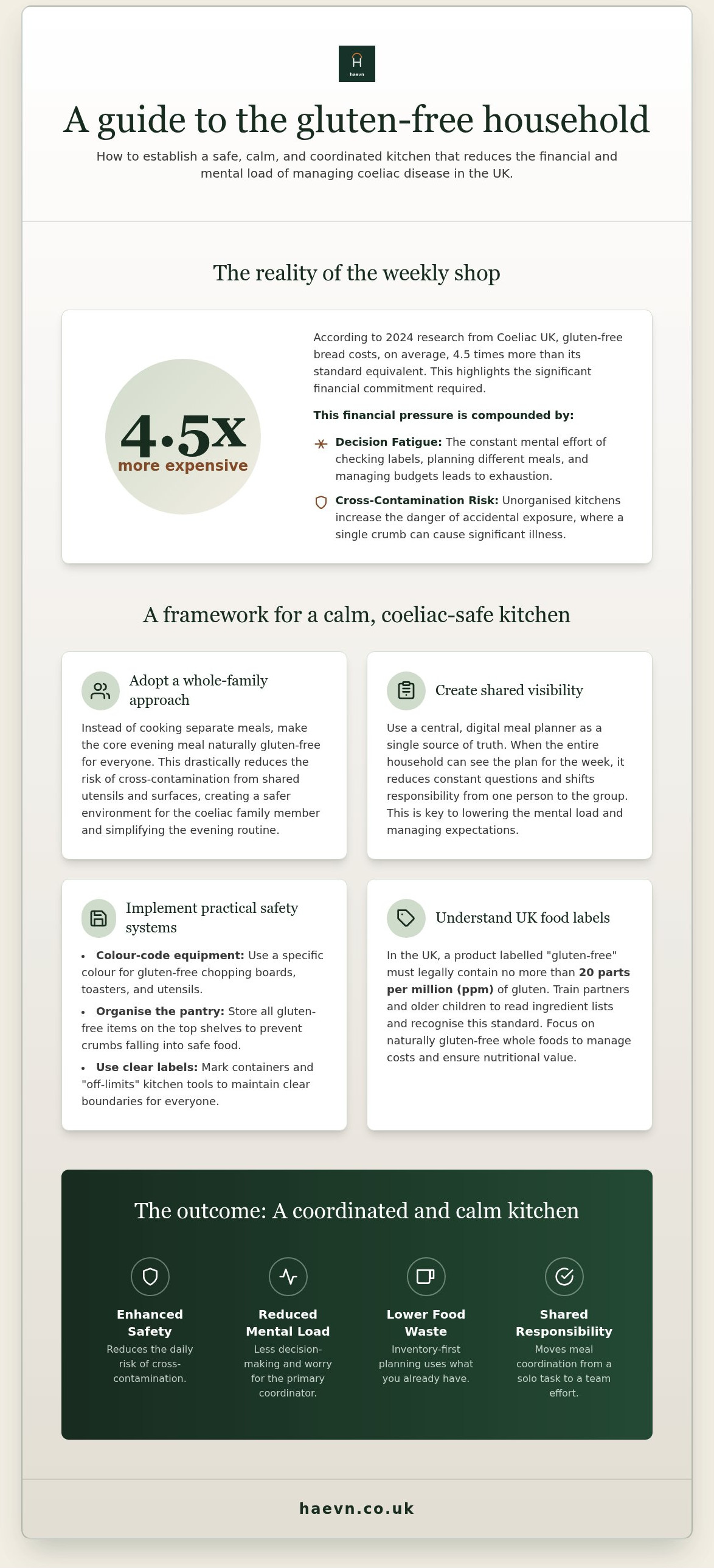
Research from Coeliac UK in 2024 found that gluten-free bread is on average 4.5 times more expensive than its gluten-containing equivalent. For many UK households, managing a coeliac diagnosis or gluten intolerance isn't just a dietary shift. It's a significant financial and logistical commitment that often leads to decision fatigue. You likely feel the constant pressure of keeping the kitchen safe from cross-contamination whilst trying to keep the weekly food shop within a reasonable budget. It's exhausting to coordinate different meals for different dietary requirements every single night.
This guide shows you how to establish a safe, nutritious, and calm kitchen environment for your entire household. By using a structured gluten-free family meal planner, you can reduce food waste and ensure everyone knows what's for dinner. We will look at practical ways to organise your kitchen, manage the higher costs of gluten-free staples, and create a shared visibility that removes the daily burden of meal coordination.
Key Takeaways
- Learn how a gluten-free family meal planner can help you coordinate a gluten-free kitchen whilst keeping your household well-fed.
- Discover how shared visibility of the weekly rotation can reduce the mental load and decision fatigue often associated with managing complex dietary requirements.
- Understand the value of using a central digital hub to provide a single source of truth for every family member to access at any time.
- Implement an inventory-first planning strategy to help manage the higher cost of gluten-free staples and lower your weekly food waste.
- Gain clarity on how to navigate modern UK labelling standards and avoid the hidden risks of cross-contamination in a shared domestic environment.
The reality of managing a gluten-free family kitchen in the UK
Many UK households cook for someone who avoids gluten. Managing this is not just about swapping bread brands. It requires a total overhaul of how the kitchen functions and how the household communicates. A gluten-free family meal planner acts as a logistical safety net. It is not just a menu; it's a system to coordinate shopping, storage, and preparation to avoid the constant risk of cross-contamination.
Unorganised dining leads to mistakes. Crumbs in the butter or a shared wooden spoon are easy mistakes in a busy kitchen. For medical advice, speak to your GP or a dietitian. Many households try to cook separate meals to save money, but this often ends in exhaustion and accidental exposure. A whole-family approach, where the core evening meal is naturally gluten-free, creates a safer environment for everyone. It removes the need for "safe zones" and reduces the chance of a tired parent making a mistake during the evening rush.
Why traditional meal planning often fails gluten-free families
Standard planning doesn't account for the complexity of a gluten-free diet. In British supermarkets, gluten-free staples are usually tucked away in small, expensive "free-from" aisles. Relying on these convenience products is a common pitfall. Research from Coeliac UK shows that gluten-free bread is 4.5 times more expensive than standard loaves. When you're tired, it's easy to reach for these pricey, processed options. This leads to decision fatigue. You end up eating the same three safe meals because the mental effort of checking new labels feels too high. Tracking safe ingredients across multiple shopping trips becomes a second full-time job without a central system.
Setting realistic goals for your household dining
The goal is to move from survival mode to a structured rotation. This doesn't mean every meal must be a culinary masterpiece. It means having a visible, predictable plan that everyone can follow. Balancing the needs of fussy children with strict medical requirements is difficult. A central plan helps manage those expectations. When the whole household can see the week ahead, it reduces the constant questions about what's safe to eat. It moves the responsibility from one person to the entire group. Shared visibility is the foundation of a calm, gluten-free home. It allows you to focus on nutrition rather than just avoiding illness.
Managing the mental load of a coeliac-safe household
Establishing a coeliac-safe household requires more than a change in diet. It demands constant mental vigilance. The psychological burden of checking every label and sourcing safe ingredients often falls on one person. This leads to burnout and mistakes. To avoid this, you must move toward a model of shared responsibility. Partners and older children should be trained to read labels and understand the risks. Cross-contamination is the primary invisible threat in a shared kitchen. Even a small amount of flour dust can cause a reaction. A gluten-free family meal planner works best when it is a collective effort rather than a solo task.
Communicating these boundaries to grandparents or external carers can be difficult. It often feels like you are being over-sensitive or demanding. Providing a single, digital reference point removes the need for repetitive explanations. It allows you to set clear rules that everyone can see and follow without you having to repeat them daily. This shared visibility creates a sense of security for the coeliac family member and reduces the administrative load on you.
Creating a safe environment without the stress
Practical systems reduce the need for constant monitoring. Colour-coding kitchen equipment is an effective way to help avoid accidents. Use a specific colour for gluten-free toasters, chopping boards, and colanders. When organising your pantry, place gluten-free items on the top shelves. This helps avoid crumbs from gluten-containing products from falling into safe food. Clear, shared notes about which kitchen tools are "off-limits" help maintain these boundaries. When everyone understands the system, the kitchen becomes a space of safety rather than a source of anxiety.
Sourcing safe ingredients in the UK
Understanding British food labelling laws is essential for household safety. In the UK, products labelled "gluten-free" must meet a legal limit for gluten, so read labels carefully. Focus on naturally gluten-free whole foods, such as fresh vegetables, meat, and pulses, to keep costs down. These are often cheaper than the processed items in the "free from" aisle. Maintaining a shared shopping list that identifies specific safe brands means that whoever does the shop buys the correct items. You can start organising your household shopping to ensure everyone stays on the same page.
Digital coordination versus traditional planning methods
Paper calendars and fridge lists are the traditional heart of the British kitchen. They provide a physical reminder of what's for dinner, but they lack the flexibility that a gluten-free household requires. If a plan changes whilst you're at work, a static list on the fridge cannot help you. A digital gluten-free family meal planner acts as a single source of truth for the entire household. It means that the person doing the shopping has the same information as the person doing the cooking. This level of coordination is essential when managing strict dietary needs where the margin for error is slim. Having everything in one place means you don't have to check three different lists to find out if you have the correct flour for tonight's dinner.
The problem with fragmented family admin
Fragmented admin is a common source of domestic stress. You might have a shopping list in one app, a family chat in another, and a paper calendar on the wall. This fragmentation leads to miscommunication. A message about a safe brand of pasta can easily be missed in a busy group chat. When plans change at the last minute, the risk of accidental gluten exposure increases because the latest information isn't visible to everyone. Privacy is also a significant concern. Your family's dietary data and health information should be stored in tools built to UK GDPR standards rather than open platforms that sell your data to advertisers.
Moving towards a centralised digital system
Real-time updates ensure everyone stays informed. This visibility means that older children or partners can check the plan without asking you. Integrating your meals with a shared calendar helps you avoid the stress of planning time-consuming recipes on busy evenings. Using a family recipe organiser app allows you to store safe, successful meals that the whole family enjoys. This creates a practical framework for your gluten-free weekly rotation that reduces the mental load of daily decision making.
By having your meal plans, shopping lists, and schedules in one place, you remove the friction that usually leads to unorganised, high-cost convenience dining.
A practical framework for your gluten-free weekly rotation
Building a sustainable routine requires a shift from choosing what you want to eat to looking at what you already have. A gluten-free family meal planner is most effective when it follows an inventory-first approach. Given that gluten-free pasta and flour often cost twice as much as standard versions, wasting these ingredients is a financial drain. A structured five-step process helps you manage these costs whilst ensuring the household remains well-fed without the last-minute panic. You can learn more about how to reduce food waste at home to further streamline your kitchen efficiency.
Step 1: The pantry and freezer audit
Start by identifying what is already in your cupboards. Keeping a digital inventory of your gluten-free staples helps you avoid buying duplicates of expensive items like xanthan gum or speciality flour blends. Look for 'use it up' opportunities, such as half-bags of quinoa or frozen gluten-free sausages nearing their date. This audit reduces the need for emergency supermarket trips, which are often where the most expensive convenience foods are purchased. When you know exactly what you have, you can plan meals around those core ingredients rather than starting from zero.
Step 2: Matching the plan to the family schedule
A meal plan only works if it fits your life. Check your shared calendar for late finishes at work, school clubs, or evening gym sessions. On these nights, select quick 15-minute meals or use the 'cook once, eat twice' method. This involves batch cooking a larger portion of a safe meal, like a gluten-free chilli or curry, and freezing half for a busier day. Batch cooking is particularly effective for gluten-free diets because many safe grains, like rice and buckwheat, reheat well and provide a reliable base for several dishes. If you are managing specific preferences alongside dietary needs, you might find our guide on meal planning for fussy eaters helpful for maintaining harmony at the table.
Step 3: Building the shared shopping list
Once the plan is set, create a shopping list categorised by supermarket aisle. This saves time and stops you from wandering into aisles where temptation or gluten-containing products are high. A shared list allows every family member to add items as they run out, ensuring you never find yourself without a safe loaf of bread on a Monday morning. Using a shared family shopping list app in the UK means the person at the shops always has the most recent version of the requirements. To start building your own system, you can create your organised gluten-free kitchen plan today.
How Haevn helps with this
Haevn is a calm space for UK household management. This is not a recipe database or a grocery delivery service. Instead, it is a tool designed to manage the logistics we have discussed in this guide. Meal Planner lets you plan the week's meals in one place, so you can keep track of what fits your household's needs. It provides a central point where the whole family can see the plan.
Centralising the mental load in Home
Home gives an overview of your household's day. Within this space, Plan and Lists work together to give up to 8 family members total visibility of the week ahead. Add the ingredients you need to Lists so whoever is at the supermarket has the correct information. A single subscription covers the entire household for £6.99 a month or £69.99 a year. There are no tiers or hidden costs. Everyone in the home can access the same information at any time.
A privacy-first approach to family data
Security is a fundamental part of the design. Haevn is built to UK GDPR standards to keep your household's personal data secure and private. It is an ad-free environment that feels like a domestic space rather than a piece of corporate software. You won't find the cluttered notifications or data-sharing practices common in other apps. The focus remains entirely on helping your family stay organised and safe. This methodical approach to coordination creates a sense of order that is easy to maintain. It allows you to spend less time on admin and more time on the things that matter. It provides a breath of fresh air in a cluttered digital landscape. By removing the psychological burden of household management, Haevn helps you regain control of your time.
Building a sustainable gluten-free household
Establishing a well-ordered kitchen requires more than just safe recipes; it requires a reliable system. Transitioning to a structured routine helps you manage the mental load and reduce the high costs associated with specialised diets. By focusing on inventory-first planning and shared visibility, you remove the constant pressure of daily decision making. A gluten-free family meal planner works best when it acts as a single source of truth for every family member, so that planning safe meals is a shared job rather than a solo burden.
Haevn provides a private, ad-free space to coordinate these household logistics for a flat rate of £6.99 per month. This single subscription covers up to 8 family members and includes access to UK-based support. Start your free trial. 14 days free, no card needed. Taking the first step toward a more organised kitchen will help you regain control of your time and create a safer environment for everyone at the table. You don't have to manage the complexity of modern domestic life alone.
Frequently Asked Questions
Is a gluten-free diet more expensive for UK families?
Yes, gluten-free staples are significantly more expensive in the UK. According to 2024 data from Coeliac UK, gluten-free bread costs on average 4.5 times more than standard loaves, whilst pasta and flour are twice the price. You can manage these costs by focusing your gluten-free family meal planner on naturally gluten-free whole foods like potatoes, rice, and fresh vegetables. Reducing reliance on processed "free-from" aisle products is the most effective way to keep your weekly food shop budget under control.
How do I avoid cross-contamination in a shared family kitchen?
Preventing cross-contamination requires strict physical boundaries. Dedicate specific equipment for gluten-free use, such as a separate toaster, breadboard, and colander. Colour-coding these items helps every family member identify safe tools at a glance. Always store gluten-free products on the top shelves of cupboards and the fridge to help avoid crumbs or spills from falling into safe food. Clean surfaces thoroughly before preparation. Coeliac UK has guidance on avoiding cross-contamination.
Can I meal prep gluten-free food for the whole week?
You can certainly meal prep for the week, provided you choose the right ingredients. Naturally gluten-free grains like rice, quinoa, and buckwheat reheat well and maintain their texture. Batch cooking stews, curries, and soups is an efficient way to ensure safe meals are always available. Be cautious with gluten-free pasta, as it often becomes brittle or mushy when reheated. Using a digital hub to coordinate your prep schedule means the whole family knows which meals are ready to eat.
What are the most common hidden sources of gluten in British kitchens?
Hidden gluten is often found in common British pantry staples. Soy sauce, malt vinegar, and many brands of stock cubes contain barley or wheat. Some spice mixes and baking powders use wheat flour as an anti-caking agent. Always check the labels on processed meats like sausages or burgers, as they frequently use breadcrumbs as a filler. Using a gluten-free family meal planner helps you track safe brands and helps avoid accidental exposure from these less obvious sources.
How do I manage a child's gluten-free diet when they are at school?
Managing school meals requires clear communication and a formal Individual Healthcare Plan. Speak with the school's catering team to understand their cross-contamination protocols and verify their "gluten-free" labelling standards. If you provide a packed lunch, ensure it is clearly labelled and stored safely. Teaching your child about safe and unsafe foods is also vital. Providing the school with a stash of safe treats means they don't feel left out during birthdays or classroom celebrations.
Is it better to cook one gluten-free meal for the whole family?
Cooking a single gluten-free meal for everyone is usually the safest and most efficient choice. It significantly reduces the risk of cross-contamination and removes the need for the person cooking to manage two different sets of pots and pans. Many household favourites, like roast dinners, shepherd's pie, or risotto, are naturally gluten-free or easily adapted. This inclusive approach simplifies the evening rush and means that the dining experience remains a shared family activity rather than a logistical challenge.