Getting organised before school starts: a calmer family plan
What if a calmer first week back depends less on tidying and more on agreeing who’s doing what? Getting organise before school starts can mean keeping track of dates, belongings and household jobs scattered across messages, bags and calendars.
It’s understandable if term-time mornings feel rushed, especially when one adult is holding all the reminders. The aim isn’t to get everything perfect before the first day. It’s to make the important decisions visible and share the jobs.
This guide helps you prioritise preparations, make school-day essentials easier to manage and agree clear responsibilities. You’ll also find ways to build routines that can adjust to real family life.
Key Takeaways
- Start getting organised before school starts with a short family check-in about key dates, supplies and routine changes.
- Build the school-week calendar in stages: add fixed events first, then review flexible routines once term begins.
- Check what you already have before buying replacements, and choose a practical place for frequently used school belongings.
- Agree who will handle recurring preparations, and offer children manageable ways to take part.
- Keep plans and to-do lists visible in one shared place, while leaving room to adjust the first-week routine.
Start getting organised before school starts with the essentials
The shift from flexible days to school-term commitments brings several moving parts back into view: school dates, regular activities, belongings and the family’s usual morning rhythm. You don’t need to sort the whole house before term begins. A short check-in can help everyone see what needs attention first and what can wait.
Set aside a little time to compare what each adult already knows. Gather school communications, existing calendar entries and notes about changes to the usual routine. A shared view of the week is easier to work from than one person’s collection of reminders. These time management principles start with making commitments visible and deciding what deserves attention.
Make one short list of what needs attention
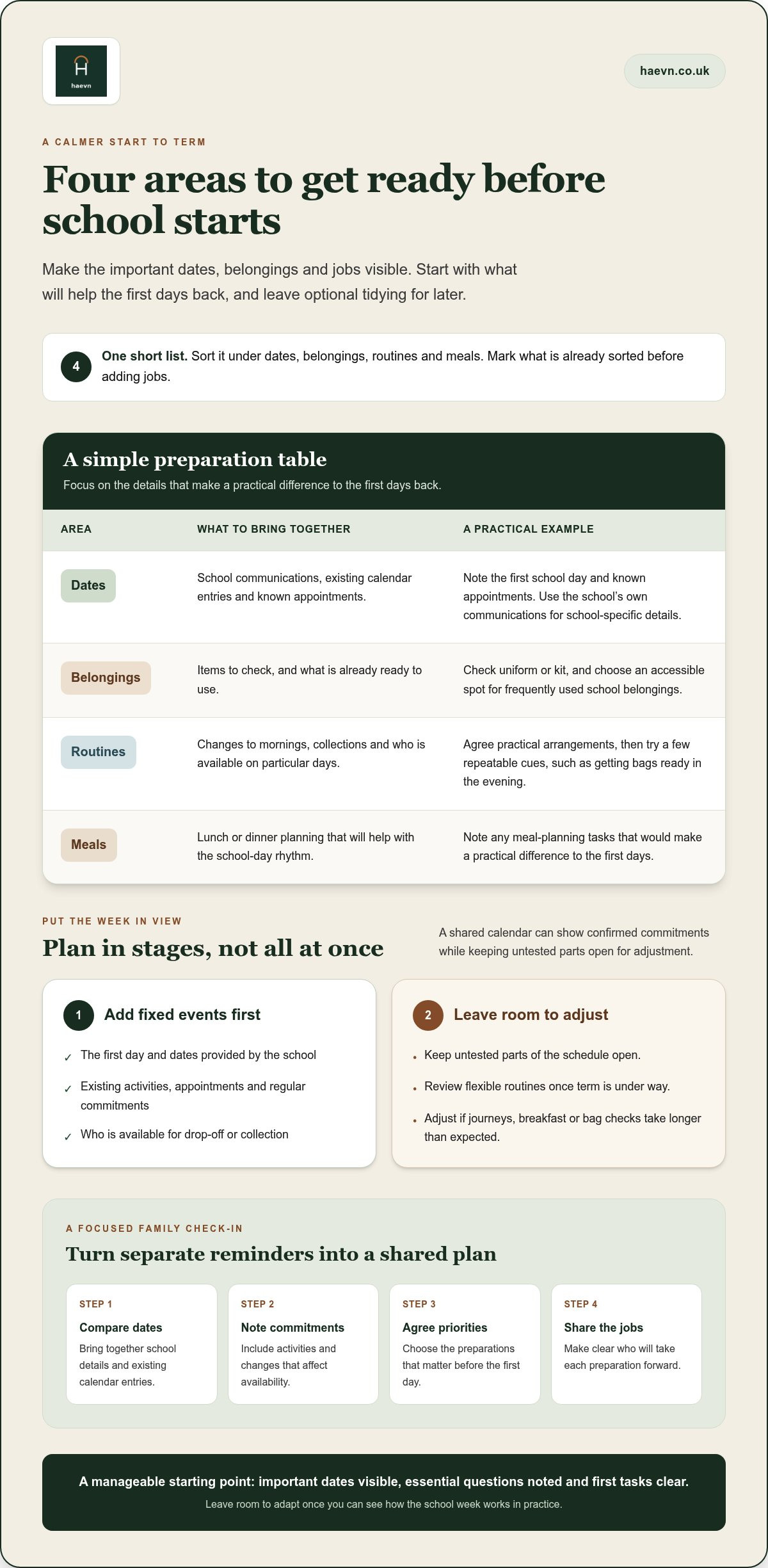
Use four headings: dates, belongings, routines and meals. Add only tasks that would make a practical difference to the first days back. For example, note the first school day and known appointments under dates; list uniform or kit to check under belongings; record changes to wake-up or collection arrangements under routines; and note any lunch or dinner planning under meals.
Mark what’s already sorted before adding jobs. If a bag is ready or a regular activity is already in the calendar, count it as done. This keeps the list useful instead of turning it into a record of everything that could possibly be improved. Choose a few priorities, such as confirming dates, checking frequently used items and agreeing the morning routine. Optional tidying can wait.
Start with information the family needs to share
Bring together school dates, regular commitments and known changes in one place that the adults involved can review. Use the school’s own communications for school-specific details, rather than relying on memory or assuming what will be needed. If something is unclear, write it down as a question to resolve instead of adding an unverified requirement to the task list.
Keep the check-in short and focused. First compare dates. Then note commitments that affect who is available, such as regular activities or changes to the usual collection plan. Finally, agree which preparations matter before the first day and who will take each one forward. One adult may spot a missing detail while another remembers an existing arrangement. Sharing the information turns separate reminders into a plan the family can see and adjust.
The aim of getting organise before school starts isn’t a spotless home or a perfect schedule. It’s a manageable starting point: the important dates are visible, essential questions are noted and the first tasks are clear. Leave room to adapt once the school week is under way and you can see how the routine works in practice.
Build a school-week calendar and routines that can flex
A calendar is most useful when it shows the shape of the week without trying to predict every detail. Start with confirmed school dates, then add regular family commitments, such as clubs, appointments or work patterns that affect the school run. Once those are visible, review the week together and spot any clashes or gaps. This order keeps the plan grounded in what’s already known.
Map the first school weeks before adding detail
Add fixed events first: the first day, dates provided by the school and existing commitments. Then note practical arrangements, such as who is available for drop-off or collection on particular days. Share each detail with the people who need it, in a place they can check when making plans.
Leave breathing room. You may not yet know how long a new journey takes or whether an activity will fit comfortably into the week. Avoid filling every open space with a task or ideal routine. A shared family calendar can keep confirmed commitments together while leaving untested parts of the schedule open for adjustment.
Once dates and regular commitments are in, look at the week as a whole. Does one adult appear to be responsible for every school-day transition? Are there evenings with several demands stacked together? Not every pinch point needs solving in advance, but noticing one gives you the chance to agree a practical response before it becomes a last-minute surprise.
Create simple morning and evening anchors
Routines don’t need to account for every minute. Choose a few repeatable cues that make the next step obvious. An evening anchor might be checking that bags are ready and putting items by the door. A morning anchor could be getting dressed before breakfast or checking the day’s calendar before leaving. The right sequence is the one that fits your household.
Write actions clearly and keep them visible where they’ll be useful. “Put reading book in bag” is easier to act on than “get ready”. Keep the list short enough to follow on a busy day, and agree who is responsible for each shared task. A K12 guide for parents on school preparation also discusses practical evening preparation, including getting bags and other school-day items ready.
Try the routine for the first few days, then review it without blame. If breakfast takes longer than expected or a bag check keeps being forgotten, adjust the timing or make the cue more visible. The point of getting organise before school starts is to give the family a useful starting rhythm, not a timetable that must be obeyed when circumstances change.
If you’d find it helpful to keep family dates in one shared place, you can set up a shared calendar and shape it around the commitments that matter to your household.
Prepare school belongings, meals and home spaces without overhauling everything
Getting organise before school starts doesn’t require a room-by-room reset. Focus on the belongings and decisions that affect an ordinary school day, then make them easier to find or share. A small, practical set-up is more useful than buying storage for every possible item.
Set up a simple place for school-day essentials
Choose an accessible spot for the things your family reaches for most: bags, coats, shoes, lunch containers or items needed for the next day. It could be a shelf, a hook, a chair or one clear corner. Use the space you have. The aim is to make the landing place easy to use, not to create a perfect display.
Before buying replacements, check what’s already in the house. Look through bags, drawers and the usual places for school belongings. Set aside items that are ready to use, then make a short note of anything that genuinely needs attention. This avoids buying duplicates and keeps preparation focused on essentials rather than a long shopping list.
Make the spot part of a brief evening check. Return misplaced items, put tomorrow’s bag where it belongs and flag anything that still needs sorting. Share the routine between adults where possible, rather than leaving one person to notice, remember and put away everything. Children can also help with a straightforward task, such as placing their bag in the agreed spot.
Make meals easier to decide and prepare
Look at the family week before deciding what to eat. A late finish or an evening activity may call for a simpler meal, while a quieter day might leave more time to prepare something. Choose familiar meals as a starting point, and check what ingredients are already available before adding items to the shopping list. Planning a few useful options is enough; you don’t need to map every meal in detail.
For packed lunches, keep the routine simple and use foods your family already knows. Check any school-specific information directly from the school, rather than assuming a particular rule applies. The practical aim is to make the next day’s lunch easier to assemble, not to create a new standard everyone has to meet.
Make the jobs visible and divide them clearly. One adult might check what’s needed for tomorrow’s meals, while another handles the evening bag check. If children are old enough, they could choose between familiar lunch options or help return items to the landing place. Agreeing who does what reduces the quiet remembering that can otherwise fall to one person.
Start with one area and one routine. Once they’re working, you can decide whether anything else needs attention. The home doesn’t need to be fully reorganised for the school week to feel more manageable.
Share the preparation and make a realistic first-week plan
A plan only helps if the people involved can see their part in it. Getting organise before school starts shouldn’t mean one adult quietly managing every reminder, bag check and change of plan. Take a few minutes to agree who will handle recurring tasks, based on availability and what works for your household, rather than assuming certain jobs belong to a particular person.
Make responsibilities visible and specific
Turn general requests into clear actions with an agreed owner. “Sort school things” can mean different things to different people. “Check tomorrow’s bags after dinner” gives everyone a clearer picture of what needs doing and when. If plans change, update the person who needs to know rather than relying on them to spot the change.
Keep shared shopping and to-do items together somewhere the adults involved can see them. That might be a shared list, a paper note in a common spot or another system the family already uses. The format matters less than having one clear place to check. It also makes it easier to notice when a task is already covered, instead of asking for the same update more than once.
Children can take part in ways that suit their age and confidence. A child might put their own shoes by the door, choose between two familiar lunch options or place a book in their bag. Make the action clear, then offer a reminder or help if needed. These are contributions to a shared routine, not a test of independence or a reason to add pressure.
Review the plan after the first few school days
Once term has begun, set aside a brief moment to compare the plan with what actually happened. Ask what felt straightforward and what created extra work. Perhaps the evening bag check helped, but the chosen time clashed with dinner. Or a regular commitment made one weekday tighter than expected. Talk about the routine, not who was to blame.
Choose one adjustment at a time. You might move a preparation task earlier, switch who handles it on a particular day or make a reminder easier to see. Changing one thing makes it easier to tell whether the new approach suits the family. Keep fixed commitments visible, but allow flexible routines to change as you learn what the week requires.
Use the plan as a shared reference, not a scorecard. Some mornings will still be busy, and family plans may need to shift. The useful measure is whether everyone can find the information and understand their next step, without one person having to hold the whole arrangement in mind. To gather shared family tasks in one place, start a shared family list.
How Haevn helps with this
A shared place for plans and everyday tasks can make it easier for family members to see what needs attention. Use it to keep information visible, while deciding together which routines suit your household.
Keep shared plans and everyday lists together
The Plan shared family calendar holds family dates and recurring commitments. It also supports external feeds. School information isn’t added automatically, so enter or connect relevant details yourself. The List holds shared shopping and to-do items, giving adults a place to check what’s been agreed.
These tools organise information, but they don’t decide what matters most or control smart-home devices. The Pot is a manual budgeting tool and doesn’t connect to bank accounts.
Try a shared family hub at your own pace
Open the web app at app.haevn.uk and add it to your home screen if that’s convenient. Start with a few dates or tasks and see whether keeping them together suits the way your family plans.
The 14-day trial requires no card. You can begin with the school-week details that are useful to your household, then build from there if it fits.
Let the new routine take shape
A school term doesn’t need to begin with every detail settled. Give your family a workable starting point, then let the first days show you what needs changing. A routine that can bend around real mornings is more useful than one that looks perfect on paper.
Choose one small next step today. You might put a key date somewhere everyone can see it, or agree who will check what’s needed for tomorrow. Keeping the preparation manageable makes it easier for each person to take part, and easier to adjust when plans shift.
If a shared place for family plans would help, take a look at the tools described above and decide whether they suit the way your household organises everyday life. Explore the family hub.
Start with what matters most. The rest can find its place as the term gets going.
Frequently asked questions
When should we start getting organised before school starts?
Begin when school communications give you something useful to act on, rather than choosing a countdown date in advance. You might set a short planning session, then stop once the key decisions are made. If further details arrive later, add them then. This keeps preparation proportionate and avoids spending time planning around information your family doesn’t have yet.
How can we keep a new school routine flexible?
Agree a simple fallback for days when the usual plan changes. For example, decide who can step in if the adult handling collection becomes unavailable, and how the other person will be told. Keep the arrangement easy to remember, and revisit it if it proves impractical. A routine is a working agreement, not a promise that every day will go to plan.
Should we buy new school supplies before checking what we already have?
Before buying, consider whether an existing item is still usable for the school day, rather than replacing it simply because it isn’t new. Check condition and fit where relevant, and use any school guidance to identify actual gaps. If you’re unsure whether an item is needed, leave it off the shopping list until you have a clear reason to add it.
How can both adults stay up to date with school plans?
Agree a simple handover for new information. For instance, if one adult reads a school message, they can note any action and tell the other person whether it needs a response or just awareness. Decide who will check for updates and when, so the task doesn’t quietly fall to one person. A brief regular catch-up can help resolve changes before they affect arrangements.