How to make a chore chart that works for your family
Why does every chore chart you start end up being ignored after a week? It's exhausting to spend more energy nagging your children to clear the table than it would take to do the task yourself. You want a home that runs smoothly, but the reality is often a colourful piece of paper on the fridge that everyone has learned to stop seeing. Learning how to make a chore chart that works isn't about finding the prettiest template or the most complex reward system. It's about shifting the responsibility from your shoulders to the whole household.
You likely feel like the only person who notices what needs doing, whilst trying to manage a career and a family schedule. This guide provides a practical route to creating a sustainable system that reduces your mental load and encourages children to contribute meaningfully. We'll explore how to transition from a tool of parental control to a shared map for the home. You will learn how to set clear expectations and maintain a routine that survives the initial novelty, creating a self-sustaining environment where everyone plays their part.
Key Takeaways
- Understand why most systems fail when the parent remains the manager rather than a coordinator.
- Identify age-appropriate tasks and the importance of teaching skills before adding them to a list.
- Discover how to make a chore chart that works by starting with small, manageable tasks to build long-term habits.
- Compare the visibility of physical charts with the accessibility of digital organisers to find the right fit for your home.
- Implement a simple weekly family meeting to review progress and keep the routine from becoming background noise.
Why most family chore charts fail within a fortnight
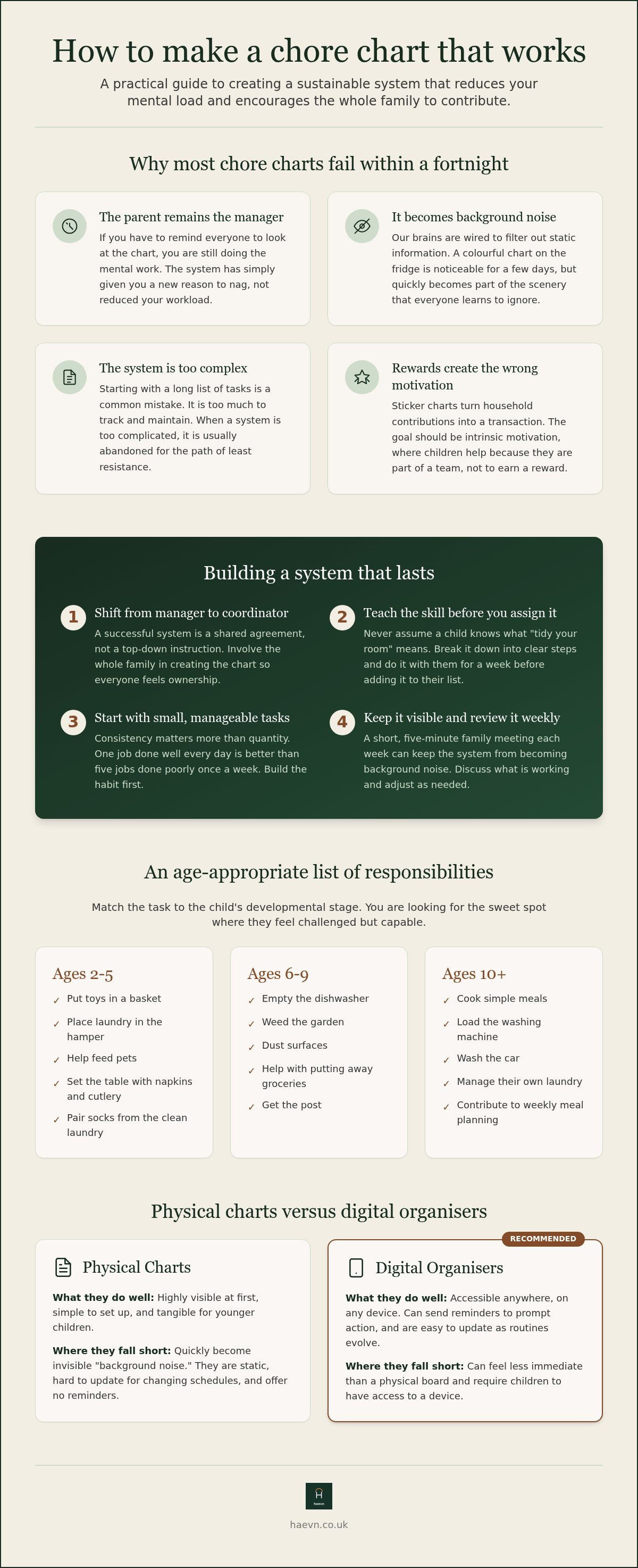
Most families start with high hopes. A new Chore chart on the fridge feels like a fresh start. But by day ten, it's just another piece of paper covered in magnets. It fails because the setup is often a top-down instruction rather than a shared agreement. If you want to know how to make a chore chart that works, you have to look at why they break. Most systems don't account for the reality of a busy household, where routines change and novelty wears off quickly.
There's a massive difference between doing a task and managing it. If you have to tell your child to look at the chart, you are still doing the mental work. The chart hasn't solved the problem; it's just given you a different prop for your nagging. Our brains are excellent at filtering out static information. That bright A4 sheet on the fridge becomes background noise within a week. It's like a "No Smoking" sign in a pub; after a while, nobody sees it. When a system is too complex to maintain, it's usually the parent who ends up tidying the mess just to get it done.
Starting with a list of twenty tasks is a mistake. It's too much to track. When the system is too complicated, parents default back to nagging. Nagging is a short-term fix that creates long-term resistance. It teaches children that they don't need to remember the task themselves because someone will eventually shout at them to do it. This creates a cycle where the child waits for the prompt, and the parent feels increasingly resentful.
The burden of the household mental load
The mental load is the invisible work of noticing, planning, and remembering. It's the "thinking" part of the job. If you're the one who designed the chart, tracked the progress, and reminded everyone to tick the boxes, you've actually increased your workload. This is a common trap. A successful system needs to be collaborative from the start. Everyone needs to understand how to make a chore chart that works for the whole house, not just for the person in charge. Shifting from a top-down management style to a shared partnership is the only way to make it sustainable.
The problem with reward-based systems
Sticker charts often fail because they rely on external motivation. Children are clever; they quickly learn to negotiate. They might refuse to pick up a sock unless there's a gold star attached. This turns household contributions into a transaction. You can read more about Kids' chore rewards: Why sticker charts fail & what works to understand how this dynamic shifts. When the reward loses its novelty, the behaviour stops. The goal should be intrinsic motivation, where children help because they are part of a team, not because they're being paid in sweets.
An age appropriate chores for kids list
We often do too much for our children. It's usually quicker to tidy the Lego ourselves than to wait for a four-year-old to do it. But children are often more capable than we assume. The secret to how to make a chore chart that works is matching the task to the child's developmental stage. If a task is too hard, they will give up; if it's too easy, they will get bored. You are looking for that sweet spot where they feel challenged but capable.
Before any task goes on the chart, you must teach it. Don't just say "tidy your room." Show them exactly what that looks like. Break it down into steps: books on the shelf, clothes in the basket, and toys in the box. Spend a week doing it with them first. This builds their confidence and means the standard of work meets your expectations. Consistency matters more than the number of tasks. One job done well every day is better than five jobs done poorly once a week.
Chores for toddlers and younger children
Young children actually want to help. They see housework as a way to mimic the adults they love. For toddlers aged 2-3, focus on simple actions like putting toys in a basket or placing their own laundry in the hamper. By ages 4-5, they can start feeding pets, setting the table, or pairing socks from the clean laundry pile. These tasks build fine motor skills and foster a sense of belonging. They start to understand that the home is a shared space that everyone looks after.
Responsibilities for older children and teenagers
As children grow, their responsibilities should evolve to reflect their increasing independence. Between ages 6-9, kids can handle emptying the dishwasher, weeding the garden, or dusting surfaces. By ages 10-13, they are ready for more complex logistical tasks. This might include cooking simple meals, washing the car, or loading the washing machine. They are learning the mechanics of how a household actually functions.
Teenagers should ideally manage their own laundry and contribute to weekly meal planning. This isn't just about getting help; it's about preparing them for life outside the family home. You can use Lists to track these evolving tasks and adjust them as your child's schedule becomes busier with school and clubs. If you are ready to start organising your household more effectively, you can create your family hub today. Understanding how to make a chore chart that works involves recognising that these lists are living documents that grow alongside your family.
Comparing physical charts and digital organisers
Choosing the right medium is a vital step in learning how to make a chore chart that works. For decades, the fridge door has been the command centre of the British home. A paper chart has one clear advantage: you can't ignore it when you reach for the milk. However, its strengths are also its weaknesses. It's static and tied to a single room. If you are at the supermarket and need to check if your teenager has emptied the dishwasher, a paper list back in the kitchen is useless.
There is also the environmental consideration. Printing a new chart every week or buying plastic-heavy magnetic boards creates unnecessary waste. Modern households move fast. A child's football practice gets moved; a parent has to stay late at work. Physical charts don't adapt to these shifts without looking like a scribbling mess. This visual clutter often adds to the feeling of domestic chaos rather than soothing it.
The limits of the paper chart
A piece of paper cannot send a notification. It relies entirely on someone looking at it and then remembering to act. When a task is overdue, the paper stays silent. This means the parent has to step in. This is where the cycle of nagging begins again. If the chart doesn't remind them, you have to. Updating a physical chart is a chore in itself. It requires you to sit down and manually rewrite tasks. Systems like this are often abandoned the moment life gets busy.
The benefits of a shared digital list
A digital organiser offers a different kind of oversight. It provides real-time updates that are accessible to everyone. If your partner finishes a task whilst you are out, you see it instantly. This transparency reduces the need for constant verbal check-ins. You can also attach notes or photos to specific tasks. If "cleaning the bathroom" is a point of contention, a photo of what "clean" actually looks like sets a clear standard. It removes the ambiguity that often leads to half-finished jobs.
Automating recurring tasks is perhaps the most significant benefit for the mental load. You only need to set up the schedule once. The system then takes over the job of remembering that the bins go out on Tuesday or the PE kit needs washing on Friday. By allowing technology to handle the reminders, you move from being the household's drill sergeant to being a coordinator. This shift is essential for anyone figuring out how to make a chore chart that works over the long term.
Strategies to make your household routine stick
The most common mistake parents make is starting too big. You might feel inspired to overhaul the entire house on a Sunday afternoon, but a massive list of new rules will likely collapse by Wednesday. If you want to know how to make a chore chart that works, start small. Assign only one or two tasks per person. This allows your children to build confidence and experience the satisfaction of a completed job without feeling overwhelmed. Once these tasks become second nature, you can slowly introduce more responsibility.
Consistency requires visibility and communication. A ten-minute family meeting every Sunday evening can help avoid a week of friction. This isn't a lecture; it's a quick check-in to see what worked and what didn't. It's also vital that parents are on the chart too. If your children see you checking off your own tasks, they understand that contributing to the home is a shared responsibility rather than a punishment. When the inevitable "I forgot" excuse surfaces, stay calm. Don't argue. Simply point to the system and wait. The goal is to make the system the authority, not your voice.
Defining done for every task
Ambiguity is the enemy of a smooth routine. Telling a child to "clean the kitchen" is too vague and often leads to half-finished jobs and parental frustration. To avoid this, create a simple checklist for what a completed chore looks like. For the kitchen, this might mean the table is wiped, the dishwasher is loaded, and the floor is swept. Avoid the urge to redo a task because it wasn't done perfectly. If you step in and fix it, you teach them that their effort doesn't matter. Instead, use the next family meeting to gently refine the standard.
Building consistency through routines
Chores stick when they are tied to existing habits. This is often called habit stacking. Emptying the dishwasher is easier to remember if it always happens whilst the kettle is boiling for morning tea. You can use Plan to schedule specific blocks of time for these activities, ensuring they fit around school runs and work commitments. Routines will inevitably be disrupted by holidays or illness. When this happens, don't abandon the system. Acknowledge the break and agree on a date to restart. If you are ready to reduce the mental load in your home, you can start your free trial today. Learning how to make a chore chart that works is a process of refinement, not a one-time event.
How Haevn helps with this
Haevn is a British-built family hub designed to centralise your household management. It moves the traditional fridge-door list into a privacy-first digital space, allowing everyone to see what needs doing without you having to say a word. By bringing chores, calendars, and lists together, it reduces the friction that often causes household systems to fail. This is a practical solution for anyone looking for how to make a chore chart that works whilst managing a busy career and family life. It is designed for up to eight family members under one subscription, ensuring the whole household is connected.
Home serves as your central point of origin, providing a composed daily overview of every task and event. It means that the mental load of remembering who does what is shared across the household. Because security is paramount, the platform is built to UK GDPR standards. This means your family's personal data remains a private matter, fostering a feeling of security and trust within your digital home.
Managing chores with Chores
Chores allows you to assign chores to family members with a few clicks. You can create recurring tasks for things like bin days or weekly bed sheet changes, meaning you never have to set up the chart from scratch again. This automation is a relief for parents who are tired of being the only ones who notice what needs doing. Because the system is accessible on the move, children can check their responsibilities from their own devices, whether they are at home or returning from school. Having this shared visibility encourages a collective effort rather than a top-down management style.
What Haevn does not do
Honesty is a core part of the brand philosophy. We do not offer a free version of the app because we refuse to sell your data or include intrusive ads. Your privacy is worth the £6.99 monthly subscription. Haevn is not a parenting app or a school tracker; it is a tool for the whole home. We also avoid the frantic energy of gamification. There are no sticker rewards or digital bribes included. We believe that helping with the household is about understanding the value of contribution, not negotiating for a gold star. By keeping the interface calm and direct, we help you maintain a routine that feels like a natural part of daily life.
Building a sustainable home together
Creating a home where everyone contributes requires more than a list on the fridge. It needs a shift in perspective. By moving from a top-down management style to a shared digital system, you can finally reduce the mental load that so often leads to burnout. You've seen that understanding how to make a chore chart that works involves matching tasks to developmental stages and being clear about what a completed job looks like. Consistency is built when everyone has visibility and the system handles the reminders.
Haevn provides a calm and organised space to centralise these routines. For one flat rate of £6.99 per month, your whole family can coordinate their lives in a privacy-first environment with no advertising. It's about reclaiming your time and fostering a sense of partnership within your household.
Start your free trial. 14 days free, no card needed
You don't have to manage it all alone. With the right system in place, a more balanced and peaceful home is well within your reach.
Frequently asked questions
How do I introduce a chore chart without it feeling like a punishment?
Introduce the system as a way to create more free time for everyone in the house. If the domestic tasks are finished quickly, there is more time for shared activities like films or games. Avoid making it a list of demands. Instead, ask for their input on which tasks they feel they can handle. This collaborative approach is a vital part of how to make a chore chart that works without causing resentment.
Should I pay my children for doing chores on the list?
Many experts suggest separating basic household contributions from paid work. You don't get paid for making your own bed, but you might earn extra for washing the car or weeding. This teaches financial responsibility whilst keeping the focus on household partnership for daily tasks that everyone should do as a matter of course.
What is the best age to start an age appropriate chores for kids list?
You can start an age appropriate chores for kids list as soon as a child can follow simple instructions, usually around age two. Toddlers find helping quite rewarding because they want to copy your behaviour. Starting early is a key part of learning how to make a chore chart that works because it establishes the routine as a normal part of life rather than a new burden introduced later in childhood.
How do I handle it when my partner does not follow the chore chart?
Address the system rather than the person. If a partner isn't using the chart, it might be that the system is too complex or the notifications are being missed. Use a shared digital hub to provide visibility without the need for constant verbal reminders. This reduces the mental load and keeps the focus on the household needs rather than personal friction, allowing the system to be the coordinator.
Can a digital chore chart work for children who do not have phones?
A digital system works perfectly on a shared family tablet or a laptop kept in a central area like the kitchen. Children don't need their own phones to check a list or mark a task as done. Using a screen in a common area allows them to interact with the hub whilst keeping their digital life supervised and contained within the family space, away from private bedrooms.
What happens if a chore is not completed by the deadline?
Allow natural consequences to play out rather than resorting to immediate anger. If the dishwasher isn't emptied, clean plates aren't available for the next meal. Avoid the urge to step in and do the job yourself. When you rescue them from their responsibilities, you reinforce the idea that their contribution isn't actually necessary. Keep the response calm and refer back to the agreed schedule during your next check-in.
How often should we update the household chore list?
Review the list once a week during a brief family meeting to keep it relevant. This allows you to adjust for school holidays, clubs, or changing skills as children grow. A static list quickly becomes background noise and is eventually ignored. Regular updates ensure the system remains a living document that reflects the actual state of your home, making it far more likely to stick over the long term.