Family routines: a practical guide for busy households
A family routine that only works on a perfect week isn’t much of a routine. Setting up a family routine can feel harder than it sounds when plans sit in different calendars, reminders live in separate conversations and one adult is left remembering what everyone needs to do. Then work runs late or a family plan changes, and the carefully arranged week no longer fits.
You’re right to want a rhythm that makes daily life easier, not another standard everyone has to meet. A useful routine is a shared agreement, with enough structure to make responsibilities and plans clear, and enough flexibility to change when life does. This guide shows you how to choose a few predictable household rhythms, make them visible to the people involved and share the planning more fairly. You’ll also find practical ways to review what’s working and adjust the routine when the week changes, without treating that as a failure.
Key Takeaways
- When setting up a family routine, start with one recurring moment that could run more smoothly, then agree a simple sequence for it.
- Link each step to a cue already in the day, such as arriving home or finishing breakfast, so the routine is easier to remember.
- Decide who owns each task and when to review the arrangement, rather than assuming someone will keep track of it all.
- Create a lighter version for busy or disrupted days, so the routine can bend when plans change without being abandoned.
- Keep recurring plans and reminders in one easy-to-check place, with only the details people need to act.
Setting up a family routine starts with what feels difficult now
The morning rush often starts before anyone leaves the house: someone is looking for a school jumper, breakfast is still being sorted and it’s unclear who is taking the children in. Or perhaps school collection changes from day to day, and the after-school plan exists only in one adult’s head. Setting up a family routine starts by noticing where the same kind of confusion keeps cropping up, not by trying to redesign every part of home life.
A routine is a repeatable agreement about what happens and who takes part. It isn’t a minute-by-minute schedule that has to unfold identically each day. It can be as simple as agreeing that bags go by the door after tea, or deciding what happens between arriving home and starting homework. Shared patterns can also reflect a household’s family culture, but they don’t need to be elaborate to be useful.
Spot the moments that need more structure
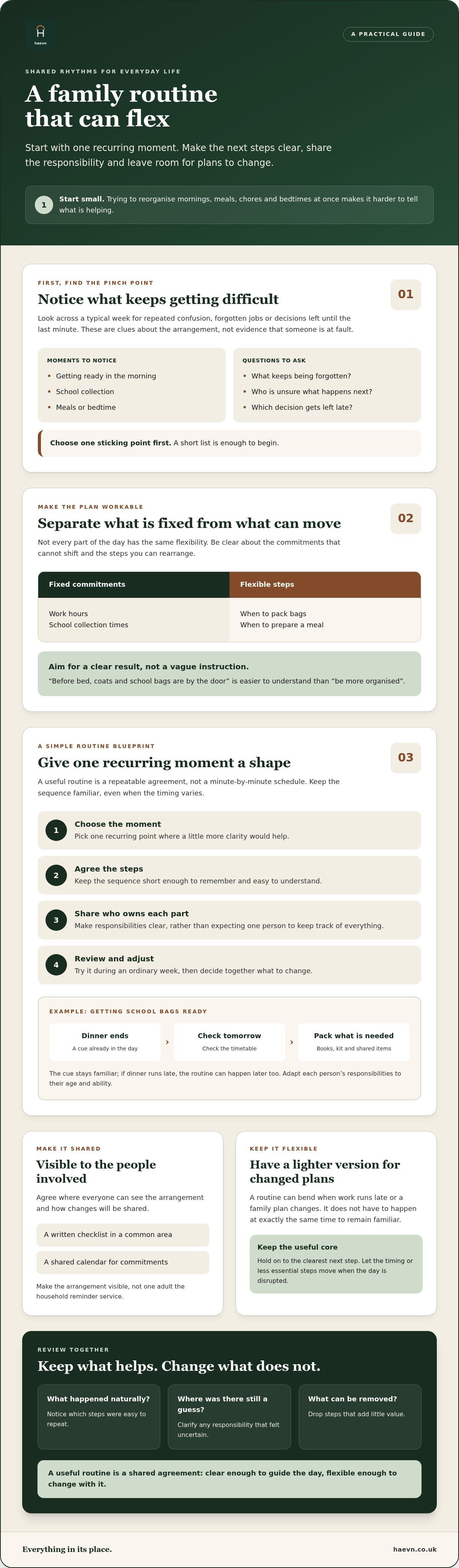
Look across a typical week and note the transitions that happen repeatedly: getting ready in the morning, school collection, meals or bedtime. Listen for the same questions coming up, notice which jobs are forgotten and mark where decisions are often left until the last minute. These are clues about how the arrangement could work better, not evidence that someone is at fault.
It can help to separate what’s fixed from what can move. School start times and work shifts may be non-negotiable; the order of getting dressed, packing bags or preparing dinner may have more room to change. A short list is enough:
- Fixed commitments, such as work hours or school collection times
- Flexible steps, such as when to pack bags or prepare a meal
- Repeated sticking points, such as not knowing who is collecting or what needs to leave the house
Pick one sticking point first. Trying to reorganise mornings, meals, chores and bedtimes at once makes it harder to tell which change is helping.
Agree what a useful routine should change
Ask everyone involved what would make that particular moment easier. A child might want to know where their PE kit goes; an adult might need clarity on collection arrangements. Make space for those answers before deciding on the steps. The goal is a routine people can understand and take part in, not a system designed around one person’s assumptions.
Describe the result in plain, observable terms. For example: “Before bed, coats and school bags are by the door” is clearer than “be more organised”. Then choose a small sequence to try during an ordinary week, such as checking the next day’s plans after tea and packing what’s needed. Keep the first version manageable. Once it feels familiar, you can decide together whether it needs changing or adding to.
Build a family routine around clear cues and shared responsibilities
Once you’ve chosen a moment to improve, give it a simple shape: choose the moment, agree the steps, decide who owns each part, then review how it’s working. A cue already built into the day can help the sequence happen without relying on someone to keep calling everyone back to it. Dinner ending, for instance, can signal the start of getting ready for tomorrow.
Routines don’t need to run by the clock to become familiar. Repeating a clear sequence gives everyone a shared idea of what comes next, while allowing the time each step takes to vary. The order might stay the same even if dinner runs late or someone has an after-school activity.
Turn one recurring moment into a repeatable sequence
Take packing school bags after dinner. Agree what needs to happen, in what order, and who will do each part. One person might check the timetable for the next day; children can put their own books or kit in their bags, while another adult checks any shared items. Adapt the responsibilities to each person’s age and ability.
Keep the sequence short enough to remember. A cue such as clearing the table can prompt the first step, without setting a strict start time. If dinner runs late, the routine can happen later too. The cue stays familiar; the timing flexes.
Make the routine shared rather than silently managed
Ask the people involved to help shape the steps, then agree where everyone can see the routine and how changes will be shared. That might be a written checklist in a common area or a shared calendar for commitments. The point is to make the arrangement visible, not to appoint one adult as the household reminder service.
Try the agreed sequence during an ordinary week, then review it together. Which steps happened naturally? Where did someone still have to prompt or guess? Remove steps that add little value and clarify any responsibility that felt uncertain. If household jobs need a broader conversation, discuss how to divide them fairly and make expectations clear. A routine works better when people understand their part and can raise changes, rather than one person having to supervise every step.
Keep a family routine flexible when the week does not go to plan
A routine isn’t only successful if it happens in exactly the same way every day. Illness, changing shifts and unexpected commitments can make the usual plan impractical. That doesn’t mean the routine has failed. A useful arrangement has enough structure to guide an ordinary day and enough flexibility to accommodate a difficult one.
Build in a fallback before you need it. For an evening meal routine, the usual version might involve cooking and eating together. On a tiring or disrupted day, the essential step might simply be making sure everyone knows what food is available and when they can eat. Agree what can be postponed, such as clearing the kitchen straight away, rather than letting one missed step cancel the whole plan.
Create a fallback for busy or disrupted days
Ask: what’s the one part of this routine that matters most today? Keep that, and make the rest optional. For a bedtime routine, that could mean prioritising getting ready for bed and leaving a longer story or extra jobs for another night. Use calm, practical language: “Tonight we’ll do the short version” is clearer and kinder than treating a changed plan as someone’s fault.
Make the fallback specific enough that everyone knows what to expect. If work shifts change, for example, agree how the household will share the new arrangement and which steps still apply. A simple alternative is easier to follow than inventing a new plan in the middle of a busy evening.
Review the routine without turning it into another task
Setting up a family routine is only the first step; it also needs to fit the household as it changes. Attach a brief check-in to something you already do, such as looking over the week’s plans together. Ask what helped, what felt awkward and whether anything needs to change. Keep the conversation focused on the arrangement, not on who got it wrong.
Make one adjustment at a time. If the routine still feels rushed, try moving one step earlier or removing an optional task, then see whether that helps before changing everything else. You can also decide to pause a routine during an unusually demanding week and return to it when circumstances settle. Keep what works, change what doesn’t and let go of steps that no longer serve the family.
Make family routines easier to see, remember and repeat
A routine is easier to follow when the people involved can find the plan without searching through separate conversations, notes and calendars. Choose one shared place for recurring commitments and household reminders. It could be a paper list in a spot everyone passes, a shared calendar or a household app. Pick what your family will actually check, not the option that looks most organised in theory.
Keep the visible plan brief. Include what people need to know and do, rather than every detail of the day. A quick glance should answer practical questions: what’s happening, who’s responsible and what needs bringing? Avoid copying the same reminder into several places. When one version changes and another doesn’t, the extra record can create more uncertainty than clarity.
Choose a reminder method your household will actually check
A paper checklist can work well for a repeatable task, such as packing for the next day. A shared calendar suits appointments, school events and other commitments tied to a particular date or time. Agree who updates shared information when plans change, and how they’ll let others know. Updating the plan is a shared household job, not an invisible responsibility that automatically falls to one adult.
Keep the routine connected to the wider household plan
Keep different kinds of information distinct. Put appointments and recurring events in the calendar. Use a list for repeatable tasks, such as checking supplies, and shopping reminders, such as adding ingredients for planned meals. That way, the family can see how a regular activity fits alongside other commitments without turning the calendar into a long to-do list. For meals, a simple weekly plan can connect shopping reminders with the evenings people are at home.
A shared family calendar can put recurring events alongside appointments and family commitments. Whatever method you choose, keep the plan easy to scan and agree how changes are communicated. Shared visibility supports the routine, but it doesn’t replace a quick conversation when arrangements shift.
If you’d like one place to organise household plans, set up a shared household hub.
How Haevn helps with this
Shared plans are easier to use when everyone involved can see them. Haevn brings family schedules, lists and other household tools together, so your family can refer to the same information while making its own decisions and having the conversations that matter.
Use shared tools to keep agreed plans visible
The Hub gives you an overview of the family’s day. The Plan is a shared family calendar for appointments and recurring events. The List keeps shared shopping, chores and routine lists together, giving repeatable tasks a place alongside the day’s commitments. The Meal Planner can help organise weekly meals, with diet and allergen filters and “Use It Up” suggestions.
The tools give your family a shared place to organise household information and plans, rather than requiring separate apps for each task.
Try the routine with the whole household
A Haevn subscription supports up to eight family members under one plan, with no per-member fee. Monthly and Annual plans are available, and the 30-day free trial does not require a payment card. You can try the shared tools with your household and see whether they suit the way your family organises its routines.
Explore Haevn with a 30-day free trial, no card required.
Make a routine that works for your household
Setting up a family routine doesn’t mean planning every minute. Start with one recurring sticking point, agree a few clear steps and make responsibilities visible to the people involved. A familiar cue can help the routine take hold, while a lighter fallback gives it room to bend when plans change.
Keep the shared plan simple enough to check at a glance, then make time for a brief review. Keep what helps and adjust what feels awkward. Changing the routine isn’t a failure. It’s part of making it fit real family life.
Haevn brings shared calendars, lists and other household tools together in one family subscription for up to eight members. You can try it with a 30-day free trial and no payment card required.
Start your 30-day free trial, no card required.
Frequently Asked Questions
How do you start a family routine?
Choose one recurring pressure point, such as a rushed morning or an unclear plan after school. Ask the people involved what would make that moment easier, then agree a short sequence and who owns each step. Make the arrangement visible and try it in everyday family life before reviewing it. Setting up a family routine works best as a small change you can learn from, not a reason to reorganise every household habit at once.
What is a good daily routine for a family?
There’s no single ideal schedule for every family. A useful routine fits your commitments and gives a recurring part of the day a familiar shape. For example, after dinner, everyone could check what’s needed for the next day, pack bags and put them by the door. Keep the order predictable but allow the timing to shift around work, school activities and other plans. Start with steps your household can realistically manage.
How do you get everyone in the family to follow a routine?
Involve the people affected when deciding what the routine includes. Make the steps easy to see, and agree who owns each task so nobody has to guess what they’re responsible for. For example, each person might prepare their own things for the next day, while an adult checks shared arrangements. A routine should be understood by everyone involved, rather than depending on one person to keep reminding and supervising the rest of the household.
Can family routines be flexible?
Yes. A routine can keep the same helpful sequence without demanding exact timings every day. If a shift changes or someone feels unwell, agree an essential version that covers what matters most and postpone optional steps. For example, prepare the key items needed for tomorrow and leave less urgent jobs until later. When circumstances allow, return to the usual routine. Adapting the plan is part of making it fit real family life.
How long does it take to establish a family routine?
There’s no fixed number of days that suits every household or routine. A simple sequence may feel workable sooner than one involving several people or changing commitments, but the best guide is how it functions in your ordinary week. Try it, then ask what helped and what felt awkward. Make a small adjustment if needed and review again. The aim isn’t to meet a deadline, but to find a rhythm your family can use.